Slate and porcelain sit on the same shelf in the tile shop, then behave like different species once they are fixed to your bathroom wall. One is stone, split from a quarry bed; the other is clay, pressed and fired until it is close to glass. Both can look superb. The choice comes down to how much natural variation you want, how much upkeep you will tolerate, and where the tiles are going — wall or floor.
A cleft slate tile has a surface worth touching: faint ridges, subtle flaking, an uneven plane that catches light differently across the room. Colours run from charcoal and blue-grey to green-grey, plum and the odd rust or copper vein, and no two tiles match. That is the appeal — and the reason installation takes longer. Your tiler will need to shuffle pieces so the wall does not end up with a dark blotch in one corner. Honed slate is smoother and more uniform, but slicker underfoot and less interesting.
Check two things before buying. Is the slate calibrated, meaning cut to a consistent thickness? Uncalibrated stone needs a thicker adhesive bed. And does it contain mineral inclusions that may oxidise over time? Some slates develop rust-coloured staining; sealing helps, but it is not a guarantee.
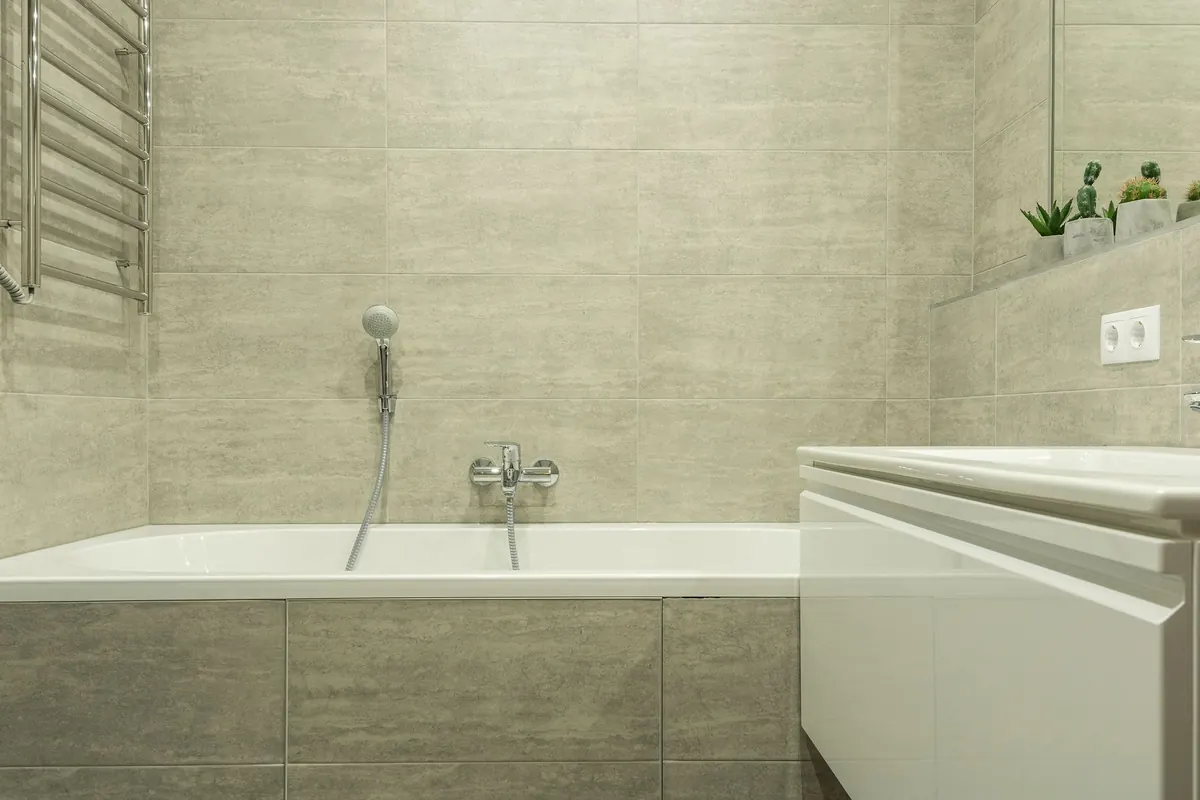
Porcelain is made to a specification: square, consistent in thickness, with a printed face that can reproduce slate, marble, concrete or plain colour convincingly. Large formats of 600 x 1200mm and beyond give a small bathroom a calm, continuous look with very few grout lines.
The catch is repetition. Patterns repeat every few tiles, so mix tiles from several boxes as you lay them or you will spot identical veins marching across the floor. Look at a full-size sample in your own bathroom light, too; showroom spotlights flatter everything.
Porcelain is the more water-resistant of the two. Fired until it is dense and vitrified, it absorbs almost nothing, which is why it is the default for wet rooms and works happily with underfloor heating.
Slate is water-resistant rather than waterproof. An impregnating sealer slows absorption, but sealer wears, and in a busy family shower the walls want resealing roughly every year or two. Let water sit on unsealed slate and it will darken, then mark.
Slip resistance matters most underfoot. Polished porcelain is genuinely hazardous when wet, something easy to forget in a showroom. For floors, choose matt or textured porcelain or natural-cleft slate, which has grip built into its surface. Tiles carry slip ratings; if you are tiling a wet room or a shower floor, check the rating, ask the supplier, and test a sample while it is wet.
Porcelain wins on upkeep, and it is not close — though "low maintenance" still means something.
Slate usually costs more per square metre, and the gap widens once you add sealer, extra waste and slower labour. Natural stone arrives with more variation and more breakages, so order ten to fifteen per cent extra. It is heavier, too, and needs a stiff, well-prepared substrate; on a timber floor, deflection has to be sorted first or the tiles and grout will crack.
Porcelain is generally cheaper, lighter and available in slim panels for walls. It is not easier to work with, though. Porcelain is hard, so cutting needs a decent diamond blade or wet cutter and drilling needs diamond bits, and large-format tiles demand a genuinely flat wall — levelling clips help, but they cannot fix a bowed surface.
Many bathrooms use both, and the result is often better than choosing one material throughout.
Keep the tones in the same family. A green-grey slate against warm beige porcelain looks accidental; the same slate with cool white or light grey porcelain looks deliberate.
For most bathrooms, porcelain is the practical answer, especially on walls, in wet rooms, and anywhere you would rather not spend a weekend resealing. It is consistent, near-impermeable, easy to clean and increasingly good at imitating stone.
Choose real slate if you want depth, texture and a surface that ages, and you are content to seal it, clean it gently and accept the occasional chip or darkened tile. That ageing is either the whole point or a deal-breaker, depending on your temperament.
Sensible middle ground: porcelain throughout, slate as a feature. Whichever you choose, buy a full-size sample, view it in your own light, order spares from the same batch, and ask your tiler about substrate preparation in writing. That last point decides whether the job lasts far more than the tile you pick.
Photo: Max Vakhtbovych / Pexels